Part Three · Chapter 11
Healing after hurt: repair, forgiveness, and when to get help
How hurt heals: why it lingers, how small breaks get mended, what a real apology sounds like, what forgiveness is and isn’t, and when it’s time to get more help.
In short:
- Hurt is real, and healing takes time. Replaying it doesn’t mean you’re weak. It means it mattered.
- Repair is what counts. Every close relationship has breaks. A real apology names it, owns it and mends it.
- Forgiveness isn’t going back. You can forgive without forgetting, excusing or letting someone back in.
- Safety comes first. You can heal even if they never say sorry, and you never owe anyone a risk to your safety.
Why the tools work: this chapter explains the thinking behind these tools from earlier in the book.
- “Get back in tune before you carry on” and “go back in with a clear sentence” (Part Two, Chapter I) are repair in small: breaks are normal, and coming back is the skill. Big idea: tune how you send and receive.
- The monthly look-back (Part Two, Chapter V) includes “look back even when nothing is slipping”, because small hurts repaired early don’t harden into resentment.
Thursday, 2am
It was one sentence, three weeks ago. They’ve probably forgotten it. You haven’t. It plays again, word for word, and you think of all the things you could have said back. You’re tired of carrying it, and you don’t know how to put it down.
Everyone gets hurt, and everyone hurts other people, mostly without meaning to. This chapter explains how hurt works, how relationships mend, and how you can heal, with or without the other person. It’s for small hurts and bigger ones. If someone is hurting you on purpose, or you feel afraid, start with safety first: Not safe at home?
-
Hurt is real, and healing takes time.
Being hurt by someone shows that something mattered: the person, your trust, your sense of being respected. The mind replays hurts because it’s trying to understand them and keep you safe. Healing isn’t a straight line. The feeling can come back on an anniversary, or when something reminds you. That doesn’t mean you’ve failed. It means you’re still healing.
For example (on your own): Months after a friend said something cruel at a party, Kwesi feels a jolt when he hears that song again. He reminds himself: “That’s an old bruise being pressed, not a new wound.”
Thoughts you could try: “This hurts because it mattered.” “A feeling coming back doesn’t mean I’m back at the start.”
Try this: When a hurt replays, notice it, name it (“there’s that memory again”), and gently bring your attention to something in the room you can see or touch.
Dig deeper: why hurt lingers -
Every close relationship has breaks. Repair is what counts.
No relationship is smooth all the time. People snap, forget, misread and let each other down. Research on parents and babies, on couples and on therapy all points the same way: breaks are normal. What matters most is whether they get mended. A small repair, done soon, often makes a relationship feel safer than if the break had never happened.
For example (a parent and child): Dad snaps at his son for spilling juice. Twenty minutes later he sits down next to him: “I was grumpy and I shouted. That wasn’t fair. Spills happen. Want to help me make a new one?”
Words you could use: “Can I have a do-over? That came out badly.” “I didn’t like how I spoke to you earlier. I’m sorry.”
Try this: Think of a small break this week, with anyone. Go back and repair it with one sentence.
Dig deeper: breaks and repair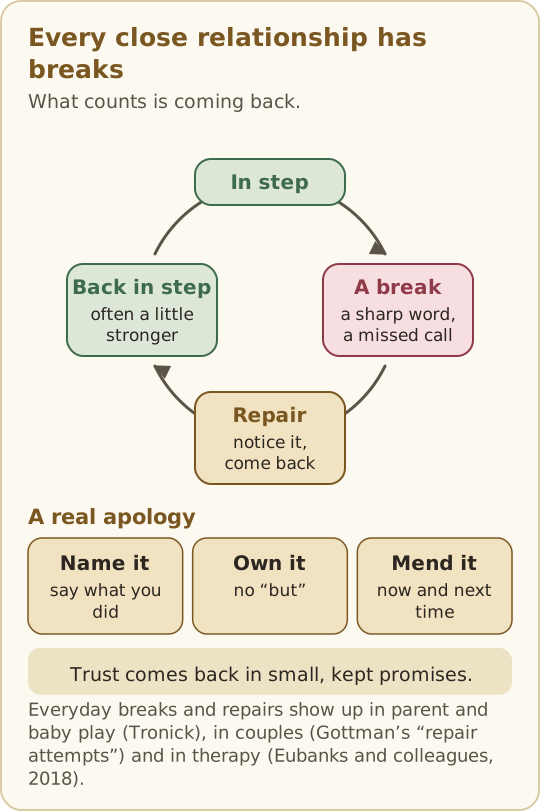
Figure 32 Every close relationship has breaks; what counts is the repair. A real apology names it, owns it and mends it. -
Telling someone they hurt you.
People can’t mend what they don’t know about. Saying “that hurt” is a risk, but it gives the relationship a chance. It works best when you describe what happened and how it felt, rather than what kind of person they are. Pick a calm moment, not the middle of an argument.
For example (a friend): Amara says to her friend: “When you told the group about my breakup before I was ready, I felt exposed. I’d like to be the one who shares my news.” She didn’t call her friend a gossip. She said what happened and what she needs.
Words you could use: “When… happened, I felt… What I’d like is…” “I’m telling you because I want us to be okay.”
Try this: Write your sentence before you say it: what happened, how you felt, what you’d like. Keep it to three short lines.
Dig deeper: saying “that hurt”Filled-in example Write it through Carys, writing to her brother Owen Write it, wait, then send
Who is it to?
- Partner
- Co-parent or ex
- Chosen: Family
- Friend
- Housemate
- Coworker
- More than one person
- Someone else
- Their name (optional)
- Owen
- Your name (optional)
- Carys
What kind of message?
- Chosen: Raise something
- Reply to something
- Make a plan
- Say sorry
- I need a pause
- What happened (facts only, one thing)
- At Dad’s 70th on Saturday, you said to everyone at the table that I don’t visit. I visited three times in September.
How it landed for me
- tired
- rushed
- frustrated
- unseen
- taken for granted
- overwhelmed
- stretched thin
- worried
- Chosen: hurt
- disappointed
- left out
- alone with it
- confused
- Chosen: embarrassed
- annoyed
- sad
- on edge
- hopeful
- grateful
- What I’m asking for (one clear ask)
- Could we talk on the phone this week about how we share the visits?
- What I’m NOT saying (optional, but it helps)
- I’m not angry with you as a person.
When I’d like a reply
- Today
- Tomorrow
- Chosen: By the weekend
- No rush
A gentle check
House rules: ✓ One topic · ✓ Facts, not verdicts · ✓ No always or never · ✓ No sarcasm or ALL CAPS · ✓ No “you” accusations · ✓ Says what you’re asking for · ✓ A reply-by time
No sharp words found. It reads as calm and clear.
A made-up example. Names and details are invented. Then the tool asks her to wait before she sends it.
Fill in your own: Write it through (spreadloveandacceptance.com/
write-it-through) -
A real apology names it, owns it, and mends it.
“Sorry if you were upset” doesn’t heal much. A real apology says what you did, takes responsibility without excuses, shows you understand how it affected the other person, and offers to put it right or do things differently. Research, such as a study led by Roy Lewicki (2016), suggests owning it and offering repair are the parts that matter most.
For example (a coworker): Leila presented a shared idea in a meeting as if it were hers. The next day she tells her colleague: “I presented our idea as mine. That wasn’t fair to you. I’ll email the team today and say it was joint work.”
Words you could use: “I did… That was my doing. I can see it left you feeling… Here’s what I’ll do.”
Try this: Next time you say sorry, check for the four parts: what I did, it was mine, how it affected you, what I’ll do now. See Apology languages for more.
Dig deeper: what makes an apology work -
Forgiveness isn’t forgetting, excusing or going back.
Forgiveness is usually described as letting go of resentment and the wish to get even. It’s something that happens inside you. It doesn’t mean saying what happened was okay. It doesn’t mean forgetting. And it doesn’t mean you have to trust the person again or have them in your life. Forgiveness is a choice, often a slow one, and you never owe it on someone else’s timetable.
For example (a grown-up child and a parent): Danielle forgave her father for missing much of her childhood. She still keeps visits short, and she still doesn’t leave her kids alone with him when he drinks. Forgiving him and protecting her family both feel right.
Thoughts you could try: “I can let go of wanting to get even, and still keep my limits.” “I don’t have to forgive today. I can just stop feeding the anger today.”
Try this: Write down what forgiving someone would mean to you, and what it would not mean. Seeing the difference can make it feel possible, or show you that you aren’t ready, which is fine too.
Dig deeper: what forgiveness is -
You can heal even if they never say sorry.
Waiting for an apology that never comes can keep you stuck. The person may be gone, unwilling, or unable to understand. Healing doesn’t have to depend on them. You can make sense of what happened, tell your story to someone safe, and decide what it means for you now.
For example (an ex-partner): After a hard breakup, Martha writes a letter she never sends. She says everything: what hurt, what she wished, what she’s taking with her. Then she puts it away. Nothing changed for him. Something shifted for her.
Thoughts you could try: “I don’t need them to understand for my healing to count.”
Try this: Write about the hurt for fifteen minutes, three or four days in a row. Write about the facts and your feelings. If it ever makes you feel much worse, stop, and talk to someone instead.
Dig deeper: healing on your own -
Trust comes back in small, kept promises.
After trust is broken, one big apology rarely rebuilds it. Trust grows back slowly, in many small moments where someone does what they said they’d do. If you broke trust, being patient and consistent matters more than a grand gesture. If you were let down, it’s fair to watch what someone does, not just what they say.
For example (partners): Declan hid a credit card debt from his partner. After it came out, he offered to share his bank statements each month, without being asked. After a year of small, steady openness, his partner says she can breathe again.
Words you could use: “I know my words aren’t enough. I want to show you, over time.” “I need to see it for a while before I can feel it.”
Try this: If you’re rebuilding trust, choose one small promise you can keep every week, and keep it.
Dig deeper: how trust is rebuilt -
Going back is a choice. Safety comes first.
After a hurt, you can mend the relationship, change its shape, or step away. All three can be healthy. If someone keeps hurting you after you’ve told them, if you feel afraid of them, or if they control, threaten or put you down, the work is to protect yourself, not to repair. Counselling together isn’t advised when someone is afraid of their partner.
For example (housemates): Ellie’s housemate borrowed money twice and didn’t pay it back. Ellie forgave the first time. The second time, she said: “I won’t lend money again. I still want us to get on in the house.” A limit, not a war.
Words you could use: “I’m not angry any more, and I’m not going back to how it was.” “I need some distance while I work out what I want.”
Try this: Ask yourself three questions: Is it safe? Has the hurt stopped? Do I want this relationship in my life? Your answers can guide what comes next. If you feel unsafe, see signs to look out for.
Dig deeper: limits, distance and safety -
Look after the hurt part of you.
Hurt lives in the body as well as the mind: poor sleep, a tight chest, feeling jumpy. Healing goes better with basic care: rest, food, movement, people who are kind to you, and talking to yourself the way you’d talk to a hurting friend. Some people find they grow after something painful. That can happen, but it’s not a test you have to pass.
For example (a stranger): A man shouted at Idris on the bus, calling him names. For days he felt shaky. He told a friend, went for long walks, and said to himself, “That was about him, not me. I’m safe now.” Slowly, the shakiness faded.
Thoughts you could try: “This was hard. Anyone would be shaken. What do I need right now?”
Try this: Pick one small act of care for today: an early night, a walk, a warm drink, a call to someone kind. Calm tools are in Upset right now?
Dig deeper: healing in body and mind
Saturday, 11am
You’ve written it all down, every word of it. Then a smaller version: “When you said that, I felt small. I’d like you to know.” You haven’t decided whether to send it. But the 2am replays have gone quieter, because now it’s on paper, not just in your head.
In everyday life
- On your own: Writing the hurt down, every word, then a shorter version, can quieten the replays. You don’t have to send it.
- With a partner: Small breaks happen daily. A quick “That came out wrong. Can I try again?” mends most of them. See How to apologise so it counts.
- Family: Old family hurts often need a different talk from new ones, and sometimes more time apart. See Family rifts.
- Friends: A friend may not know they hurt you. “Can I tell you something that stung? I’d rather say it than drift.” keeps the door open.
- At work: Keep it to the facts and what you need next time. A short note afterwards helps both of you remember the same thing.
- After someone has died: You can still heal a hurt with someone who is gone, by writing to them or talking it through with someone you trust. See Grief and later life.
- After an affair: The shock is real for both people. Couples can recover, and some decide to part; both can be done with care. Trust returns through kept promises over months, and a couples therapist can help. More in the full chapter.
- If you decide to separate: Part as kindly as you can. Tell children together, without blame, and never ask them to choose. Write decisions down, and consider family mediation where it’s safe. More in the full chapter.
Common mix-ups
- “If I forgive, I’m saying it was okay.” Forgiving isn’t excusing. You can forgive and still say it was wrong.
- “If I forgive, I have to let them back in.” Forgiveness and going back are separate choices.
- “A good relationship never has breaks.” Every close relationship has them. Mending them is what builds safety.
- “Saying sorry means it’s fixed.” An apology opens the door. Trust comes back through what happens next.
- “I should be over this by now.” Healing has no deadline. Feelings returning doesn’t mean you’re back at the start.
- “I can’t heal unless they admit it.” Their apology can help, but your healing can go ahead without it.
If you want to help someone else with this
- Listen before you advise. “That sounds really painful” helps more than “You should just let it go.”
- Don’t rush forgiveness. Pushing someone to forgive can feel like being told their hurt doesn’t matter.
- Don’t push them to cut someone off, either. It’s their relationship and their choice, unless they’re in danger.
- If you caused the hurt, give a real apology and then give them time. Don’t ask them to make you feel better about it.
- If they mention fear, threats or control, take it seriously and share Not safe at home?
Words you could use: “Do you want to talk it through, or would it help more to take your mind off it?” “Whatever you decide about them, I’m on your side.”
When to get more help
Some hurts are too heavy to carry alone, and getting help is a sign of strength, not weakness. Think about talking to a doctor, counsellor or therapist if:
- More than a month after something frightening, you still have flashbacks, nightmares, feel constantly on edge, or avoid places and people that remind you of it. These can be signs of trauma, and there are well-tested treatments for it, such as trauma-focused talking therapies.
- The hurt is taking over: you can’t sleep, work or enjoy anything, or you’re drinking or using more to cope.
- The hurt came from abuse or violence, now or in the past. The page Free, private people to talk to includes specialist lines.
- You’re having thoughts of hurting yourself or someone else. Please reach out today. In the US and Canada, call or text 988. In the UK and Ireland, call Samaritans free on 116 123. In Australia, call Lifeline on 13 11 14. In New Zealand, call or text 1737. Anywhere else, findahelpline.com lists free helplines. If anyone is in danger now, call your local emergency number.
If you and someone else both want to mend things, a couples or family counsellor can help, as long as nobody is afraid of the other.
Tools and reading on this site
Tools helpers you use on the site
- Upset right now? for calming down in the moment, and the Nervous System Ladder for checking your state.
Reading pages to read on the site
- Apology languages: how to say sorry so it lands, and asking for forgiveness.
- Library: forgiveness, what research says about apologies and repair attempts.
- Library: rumination, expressive writing and self-compassion.
- Stories from philosophy: the Second Arrow.
More for your situation
- Families: Adult siblings and family rifts · For grown-up children
- After a breakup: On my own · Co-parenting
- Friends: When a friendship drifts
- Children who have been hurt: Foster, adoptive and kinship families
- After a loss: Grief and later life
- Find your own starting point: Help by relationship.
More in Part Three
← Chapter 10: Values, meaning and a good life · Chapter 12: Helping others well → · All chapters in the contents
A limit to keep in mind: This chapter is for everyday hurts and for thinking about bigger ones. It isn’t therapy, and it isn’t a reason to stay somewhere unsafe. If you’re afraid of someone, the most healing step is getting safe. Not safe at home?
Last updated: October 2026