Part Three · Chapter 12
Helping others well: support without fixing, boundaries, and not burning out
How to help someone without taking over: asking what they need, listening first, caring without drowning, keeping kind limits, what to do in a crisis, and how to keep going without burning out.
In short:
- Ask what kind of help they want. “Ideas, or just someone to listen?” saves a lot of misfires.
- Listening is help. Fixing it for someone can take away their power.
- Your limits make your help last. Caring from a steady place helps more than drowning in their feelings.
- In a crisis, stay and bring in help. It’s okay to ask directly about suicide, and to call for help.
Why the tools work: this chapter explains the thinking behind these tools from earlier in the book.
- One owner per job: sharing the care (Part Two, Chapter IV) works because help lasts when it is shared and named. Carers burn out when everything is “just helping” and nobody else owns a job. Big idea: see the whole load.
- How much are you carrying? (Part Two, Chapter III) helps you notice when you are running on empty before you snap or stop.
Wednesday, 7:15pm
Your friend is telling you about her awful week. You have five good ideas before she’s finished her first sentence. You share them all. She goes quiet, then says, “Yeah, maybe.” You both hang up feeling a bit worse, and you’re not sure why.
Most of us want to help the people around us. But helping well is a skill, and good intentions don’t always land. This chapter explains how support works, why “fixing” can backfire, and how to care for others in a way you can keep up. It’s for friends, partners, parents, coworkers, carers, neighbours, and anyone who has ever wanted to help and didn’t know how.
-
Ask what kind of help they want.
Help comes in different kinds. Some people want ideas. Some want someone to listen. Some want a practical hand, like a meal or a lift. Some just want company. Giving the wrong kind, even kindly, can leave someone feeling unheard. The simplest fix is to ask.
For example (a friend): In the scene above, a better start would have been: “That sounds like a rotten week. Do you want ideas, or do you just want to vent?” She would have said “vent,” and the call would have gone very differently.
Words you could use: “Do you want ideas, a listening ear, or a hand with something?” “What would help most right now?”
Try this: Next time someone tells you about a problem, ask what kind of help they want before you give any.
Dig deeper: kinds of support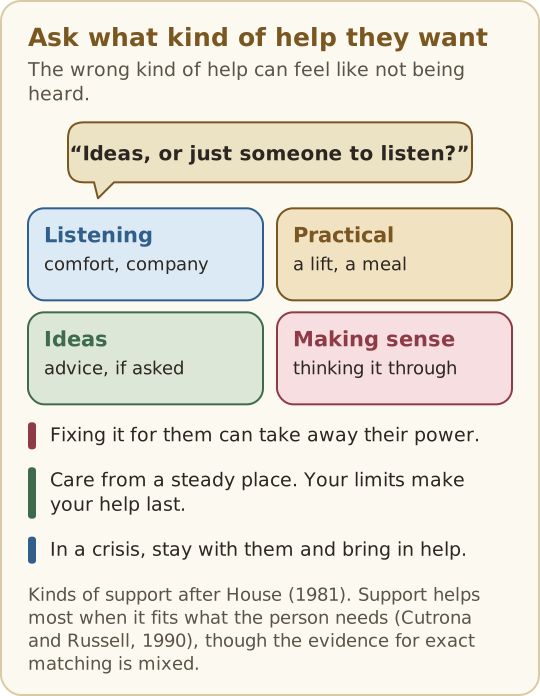
Figure 33 Ask what kind of help they want. Fixing it for them can take away their power, and your limits make your help last. -
Listening is a kind of help.
Being truly heard is powerful. It helps people calm down, think more clearly, and often find their own answers. Good listening means paying attention, not interrupting, checking you understood, and showing that their feelings make sense, even if you’d feel differently.
For example (partners): Ravi comes home upset about his boss. Instead of “Just quit,” his partner says: “So he criticised you in front of everyone, after you stayed late all week. No wonder you’re furious.” Ravi’s shoulders drop. Ten minutes later, he has his own plan.
Words you could use: “So what happened was… Have I got that right?” “That makes sense. Anyone would feel that way.”
Try this: In one conversation today, listen for two whole minutes without giving advice. Then sum up what you heard.
Dig deeper: how listening helps -
Fixing it for them can take away their power.
When we love someone, we want to make the problem go away. But doing things for people that they could do themselves can leave them feeling less capable. Helping well often means helping someone do it, not doing it for them. It respects that it’s their life and their choice.
For example (a parent and a grown-up child): Rosalind’s 24-year-old son is struggling with a job application. She wants to rewrite it. Instead she asks, “Want me to read it and tell you what stands out?” He makes the changes himself, and feels proud when he gets the interview.
Thoughts you could try: “Is this mine to fix, or theirs to solve with my support?” “What do they want to do here?”
Try this: Notice the urge to fix. Before acting, ask: “Would you like me to do that, or help you do it?”
Dig deeper: support without taking over -
Care without drowning in their feelings.
Feeling someone’s pain as if it were your own can wear you out fast. Researchers separate this “empathic distress” from compassion: warm concern from a steadier place. Compassion still cares deeply. It just doesn’t require you to sink with the other person. A steady helper is more useful than a second person drowning.
For example (housemates): When Abi’s housemate went through a breakup, Abi cried every night with her and couldn’t sleep. After a week she was exhausted. She changed approach: kind and present, but also taking breaks, and reminding herself, “This is her pain. I can care without carrying all of it.”
Thoughts you could try: “I can be with them in this without making it mine.” “I care, and I’m steady.”
Try this: After a heavy conversation, do something that brings you back to yourself: a walk, a shower, five slow breaths. It isn’t abandoning them. It’s refilling.
Dig deeper: empathy and compassion -
Your limits make your help last.
Saying yes to everything isn’t kindness in the long run. It leads to resentment, exhaustion and, eventually, not being able to help at all. Limits tell people what you can give, so your yes means something. A kind no, with a suggestion of what you can do, is still help.
For example (siblings): Kojo’s sister keeps asking to borrow money. He loves her and he’s running out. He says: “I can’t lend money any more. I can help you go through your bills on Sunday, if you’d like.”
Words you could use: “I can’t do that, but I can do this.” “I want to help, and I need to stop at nine tonight.”
Try this: Write down one thing you’re giving that you can’t keep giving. Plan a kinder, smaller version you could offer instead.
Dig deeper: boundaries in helping -
Notice when you’re running on empty.
People who help a lot, like carers, parents, nurses, teachers and the friend everyone calls, can burn out. Signs include feeling exhausted most of the time, feeling numb or cynical about the people you help, getting ill more often, or dreading the next call. It doesn’t mean you’re a bad helper. It means you need help too.
For example (a carer): Helen has looked after her husband since his stroke. She snaps at him, then feels terrible. Her doctor says it sounds like carer strain. A local carers’ group and a few hours of respite each week give her back a little of herself, and she’s gentler at home.
Thoughts you could try: “Looking after myself is part of looking after them.”
Try this: Rate your energy from 1 to 10 each evening for a week. If it’s often 3 or lower, ask someone for one specific kind of help. See Caring for someone you love.
Dig deeper: burnout and refilling -
In a crisis, stay with them and bring in help.
If someone tells you they’re thinking of ending their life, or you’re worried they might be, it’s okay to ask them directly. Research, such as a review led by Tim Dazzi (2014), suggests asking about suicide doesn’t put the idea in someone’s head; it can bring relief. You don’t have to be their therapist. Your job is to listen, stay with them, and help them reach trained support.
For example (a coworker): A colleague says, “Sometimes I think everyone would be better off without me.” Kirsty says gently: “I’m really glad you told me. Are you thinking about ending your life?” She says she’s had thoughts. Kirsty stays with her and they call a crisis line together.
Words you could use: “Are you thinking about suicide?” “I’m glad you told me. You don’t have to go through this alone. Let’s call someone together.”
Try this: Save a crisis number in your phone now, so you have it if you ever need it. In the US and Canada, call or text 988. In the UK and Ireland, call Samaritans free on 116 123. In Australia, call Lifeline on 13 11 14. In New Zealand, call or text 1737. Anywhere else, findahelpline.com lists free helplines. If someone is in immediate danger, call your local emergency number.
Dig deeper: helping in a crisis -
Don’t wait for someone else to step in.
When lots of people see something go wrong, each person can assume someone else will act. Psychologists call this the bystander effect. Knowing about it helps you break it. You don’t have to be a hero. Small, safe actions count: asking “Are you okay?”, getting staff, or calling for help.
For example (a stranger): On a train, a man is making a young woman uncomfortable. Yvonne doesn’t confront him. She sits next to the woman and asks loudly, “Hi! Is this the train to Leeds?” The woman joins in the chat, and the man moves away.
Words you could use: “Are you okay? Do you need anything?” To someone else nearby: “Can you get the driver? I’ll stay here.”
Try this: Think of one safe thing you could do if you saw someone in trouble in a public place: distract, get help, or check in afterwards. Having a plan makes it easier to act.
Dig deeper: helping strangers and community -
Let other people help you too.
Helping goes both ways. People who are good at giving help are often bad at receiving it. But letting others help is a gift to them, too: most people like being useful to someone they care about. Relationships where only one person ever helps tend to feel uneven over time.
For example (on your own, as a new parent): Nkechi kept saying, “We’re fine, thanks,” to every offer after the baby came. When she finally said yes to a neighbour’s offer of a meal, the neighbour was delighted, and they became friends.
Words you could use: “Yes, thank you. That would really help.” “Could you do one thing for me this week?”
Try this: Say yes to the next small offer of help you get, even if you could manage without it.
Dig deeper: receiving helpFilled-in example One owner per job: sharing the care Margaret and Alan, with their daughter Sue One owner per job: sharing the care
- Person A
- Margaret
- Person B
- Alan
- Person C
- Sue
- Date of this list
- 6 October 2026
Who owns each job
Job How often Roughly how long? (hours each time, optional) Owner Helper or backup (optional) Notes Medicines and the pill box (as the care team directs) Weekly 0.5 Margaret Sue Sue checks it on Sundays Book and go along to medical appointments As needed 3 Sue Margaret Sue drives; Mum comes too Insurance and paperwork Monthly 1 Alan Sue Dad can do this from his chair Night care and night-time calls Daily 1 Margaret Ask the nurse about a night sitter Sunday call with the family Weekly 0.5 Alan Book respite: a break for the main carer Monthly 0.5 Sue Mum’s Thursday afternoon off Groceries and meals Weekly 2 Sue Margaret Online shop, Sue orders Does every job have an owner?
- Jobs with an owner
- 7 of 7. Every job has an owner.
- Who’s carrying more right now
- Margaret 63% · Alan 9% · Sue 28%. Does this match what you agreed? If it doesn’t match, ask which job could move first. It’s a starting point for a talk, not a scorecard.
Changes to the list
Date What changed Who 6 Oct 2026 Sue takes Tuesday nights from next week, so Margaret gets one full night’s sleep. Margaret, Alan and Sue A made-up example. Names and details are invented. This is about who owns each job, not medical advice.
Fill in your own: One owner per job (sharing the care) (spreadloveandacceptance.com/
workpapers/ fill/ wp-03)
The next Wednesday, 7:15pm
Your friend calls again. This time you say, “Rough week? Do you want ideas, or just to talk it out?” She laughs and says, “Just talk.” You listen. At the end, she says, “I think I know what I’m going to do.” You didn’t give her a single idea, and it was the most helpful call you’ve had in months.
In everyday life
- On your own: Helping yourself counts too. Ask yourself the same question: “Do I need ideas right now, or just some rest?”
- With a partner: “Do you want me to help, or just to hear it?” works at home as well as anywhere.
- Family: Caring for a parent or a child with extra needs is long-haul help. Share the load early. See Caring for someone you love.
- Friends: The friend everyone calls needs someone to call too. Notice who that might be.
- At work: Covering for a struggling coworker is kind for a week. Longer than that, it needs a real conversation with the team. See At work.
- With strangers: In an emergency, point to one person: “You in the blue coat, please call for help.” A crowd often waits for someone else.
- If you have ADHD: Helping is interesting and urgent, so a fast “yes” is easy. Try “I’d like to help. Let me check my week and come back to you tonight.” And ask for the practical help you need too. More in the full chapter.
Common mix-ups
- “Helping means solving the problem.” Often, helping means listening, being there, or helping someone find their own answer.
- “If I really cared, I’d feel everything they feel.” Caring from a steady place helps more and lasts longer.
- “Good helpers never say no.” Good helpers last because they know their limits.
- “Asking about suicide might give them the idea.” Research suggests it doesn’t, and asking can help someone open up.
- “I’ll make it worse if I step in.” There are small, safe ways to help. Doing nothing often feels worse for the person in trouble.
- “I should be able to manage without help.” Everyone needs help sometimes. Receiving it is part of a healthy relationship.
If you want to help someone else with this
This whole chapter is about helping others, so here’s help for the helpers around you:
- Notice the helpers. The carer, the friend everyone calls, the coworker who always covers. Ask them how they are, and mean it.
- Offer specific help. “Can I take the kids on Saturday morning?” is easier to accept than “Let me know if you need anything.”
- Give them permission to rest. “You’re allowed a night off. I’ve got this.”
- If a helper seems burned out, share Caring for someone you love or suggest they talk to a doctor.
Words you could use: “You look after everyone. Who looks after you?” “I’d love to do something for you this week. What would help?”
When to get more help
- If someone is in danger now, call your local emergency number.
- If someone talks about suicide, stay with them and contact a crisis line together. In the US and Canada, call or text 988. In the UK and Ireland, call Samaritans free on 116 123. In Australia, call Lifeline on 13 11 14. In New Zealand, call or text 1737. Anywhere else, findahelpline.com lists free helplines.
- If someone tells you they’re being hurt or controlled at home, believe them, don’t confront the other person yourself, and share Not safe at home?
- If you’re burned out as a helper or carer, talk to your doctor, a carers’ organisation or a counsellor. Respite and support are not luxuries.
- If helping someone is becoming unsafe for you, step back and bring in professionals. You can still care from a safer distance.
Tools and reading on this site
Tools helpers you use on the site
- Check-ins, for tender conversations, and Professor Puddles if you want help finding words.
Reading pages to read on the site
- Library: active listening, advice or support? and validation.
- Library: empathic distress and compassion and social support.
- Library: burnout and caregiver strain.
- Library: saying no and boundaries.
- Stories from philosophy: the circles of Hierocles.
More for your situation
- Carers: Caring for someone you love · When one of you is ill
- Friends: Friends
- Parents and grandparents: For parents · For grandparents · When a child has ADHD
- At work: At work · For counsellors, coaches and group leaders
- After a loss: Grief and later life
- Find your own starting point: Help by relationship.
More in Part Three
← Chapter 11: Healing after hurt · Chapter 13: Anger → · All chapters in the book’s contents
A limit to keep in mind: This chapter is about everyday helping. It isn’t training in crisis care or therapy. When someone’s safety is at risk, the most helpful thing you can do is bring in people trained to help.
Last updated: October 2026