Part Two: Between us · Chapter I
Why we get out of tune: communication at home
Why two kind, reasonable people can end up in a tangle neither of them started, and how to get back in step.
In short:
- A clash often isn’t about the words. Pace, tone and urgency can be out of step even when both of you mean well.
- Nobody has to be wrong. Name it (“we’re out of tune”), pause with a time to come back, and slow down.
- Go back in with one clear sentence: a fact, a feeling and an ask.
- A 90-second daily check-in keeps small drifts small.
The big ideas: This chapter mostly teaches “Tune how you send and receive”, with help from “Read your state first”. What are the five big ideas?
Tuesday, 6:40pm
“I said I’d do it.” “I know, I’m just asking when.” Four sentences later, nobody is talking about the bins any more, and neither of you can point to the moment it turned.
-
The tangle often isn’t about the words.
Two people can each say something reasonable and still clash, because the tone underneath doesn’t match. It’s like two radios slightly out of tune: together they make a crackle that neither one was making alone.
For example: Two housemates. “Is anyone using the oven tonight?” “Why, did I leave a mess?” A plain question was heard as a complaint.
Words you could use: “I think the words were fine. Something in how we said them got crossed.”
Try this: After your next small clash, ask yourself: was it the words, or the way they came out?
Dig deeper: the radio static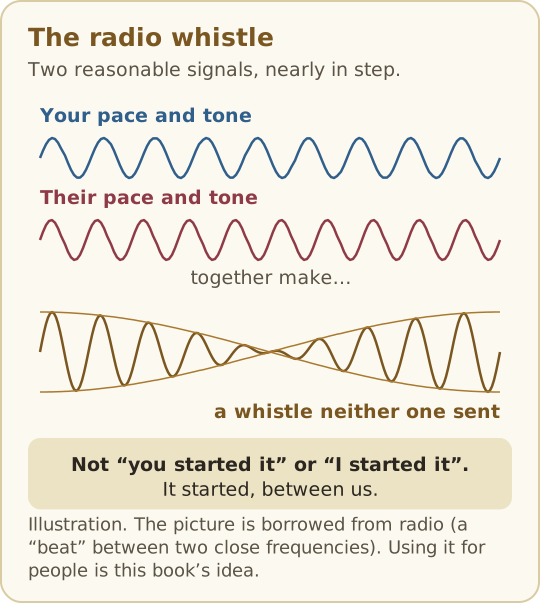
Figure 11 The radio whistle. Two reasonable signals, nearly in step, can make a clash that neither person started: it started between you. -
Nearly in step is the noisy part.
Radios on very different stations don’t whistle at each other. The whistle comes when they are close but not quite matched. People who know each other well can still clash. Research suggests we check our meaning less with people we’re close to, because we assume they already understand us.
For example: Two sisters who talk every day clash over holiday plans far more than they ever do with cousins they see once a year. Being close means more overlap.
Words you could use: “I think I assumed you knew what I meant. Let me say it more clearly.”
Try this: With someone close, check one meaning today: “Just so I’ve got it right, you mean…?”
Dig deeper: why close can be noisy -
Three things knock you out of tune.
How fast you’re talking. The tone, when a simple update is heard as a complaint. And how urgent it feels: “when you get a chance” can mean tonight to one person and next week to the other.
For example: A business partner texts “Need to talk” between two meetings. The other partner reads it as a crisis and can’t sleep. It was about a printer. A text loses most of the tone, so urgency is easy to misread.
Words you could use: “By when would be good?” “Is this an update, or a worry?”
Try this: Add a time to your next request. Not “at some point,” but “by Friday.”
Dig deeper: pace, tone and urgency -
Stress changes your station.
When you’re tense, you may talk faster and be more likely to hear a pause as a snub. When you’re tired and flat, your replies get slower and shorter. The Nervous System Ladder, a thirty-second self-check, helps you guess which one you’re in. It’s a best guess, not a reading.
For example: A dad gets home from a night shift and answers his teenager with one word. The teen hears “he doesn’t care.” He is just running on empty.
Words you could use: “I’m running low right now. It’s not about you. Can we talk after I’ve slept?”
Try this: Before a tricky talk, name your state to yourself: calm, revved up or running on empty.
Dig deeper: how stress shifts your tune -
Nobody has to be wrong.
Two radios that both work fine will still crackle if they’re slightly off. Arguing about whose fault the static is won’t clear it. Retuning (getting back in step) will.
For example: A grandmother tells her grown-up son, “You look tired.” She means care. He hears “you can’t cope.” Neither of them is wrong about what they meant or heard.
Words you could use: “I don’t think either of us meant it that way. Can we try that again?”
Try this: In your next clash, say “we” instead of “you”: “We got crossed there.”
Dig deeper: taking the blame out -
Get back in tune before you carry on.
Say it out loud: “I think we’re out of sync.” Check how tense you feel. Either of you can call a pause, and the person who paused names a time to come back. Gently slow down, with shorter turns and more pauses. Only then go back to the actual topic.
For example: Two dorm roommates agree on a pause word, “static,” on a calm day. Mid-argument about noise, one says it. They stop, and come back at 9pm as agreed.
Words you could use: “I need ten minutes. I’ll come back at half past.”
Try this: Agree a pause word with someone today, while you are both calm.
Dig deeper: the four steps to retune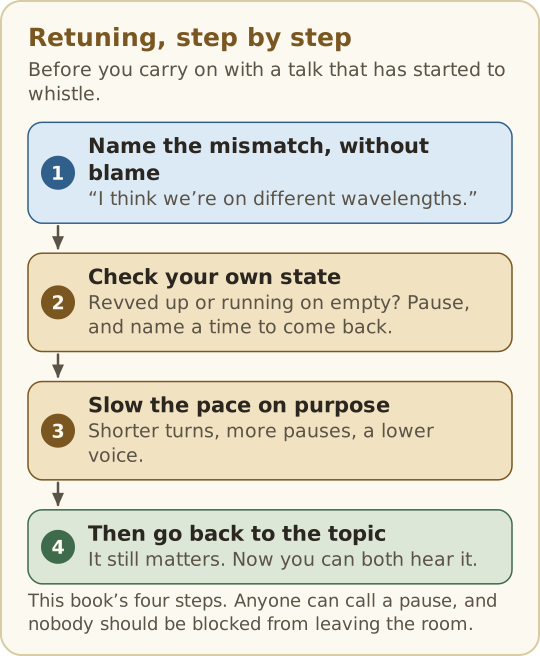
Figure 12 Retuning, step by step, before you carry on with a talk that has started to whistle. -
Go back in with a clear sentence.
When you return to the topic, say the fact, how you feel, and what you’d like. “The bins go out early on Wednesday morning. I get anxious when they’re late. Could you put them out tonight?”
For example: A co-parent texts: “The swim kit wasn’t in the bag. I felt stressed at drop-off. Could you pack it on Sunday nights?” A fact, a feeling, an ask.
Words you could use: “The fact is… I feel… Could we…?”
Try this: Write one fact, feeling and ask sentence about something small, before you need it.
Dig deeper: going back in -
Small daily check-ins keep you in tune.
A short chat each day, like the 90-second daily check-in, can make tiny corrections before small things drift into a big argument. Habit research suggests small routines at a regular time are easier to keep than big ones done rarely. The quiet, easy stretches are the ones that drift most, so keep it going even when nothing seems wrong (see Complacency).
For example: A long-distance couple in two time zones send one 90-second voice note each morning. It’s tiny, but it keeps them in step.
Words you could use: “Today I was carrying quite a lot. One thing I liked today was…”
Try this: Pick a time and a cue, like right after dinner, and try the check-in for three days.
Dig deeper: staying in tuneFilled-in example The 90-second daily check-in Priya and Dev, a couple on different shifts The 90-second daily check-in
- Person A
- Priya
- Person B
- Dev
- Week beginning
- 5 October 2026
Each day
Day Person Load One thing I appreciated today One small thing that didn’t feel great One thing that would help tomorrow Mon Priya High You left soup in the fridge before my night shift Woke up to the washing still in the machine A text when you’re leaving work Mon Dev Medium Your note on the kettle Bins out before I go at six Tue Priya High You kept the house quiet till noon Ten minutes together at the shift change Tue Dev Low You booked the car in Missed you at dinner again Wed Priya Medium Breakfast together at 8 Early night Wed Dev Medium You remembered my mum’s call Load this week
- Priya
- 2 high, 1 medium, 0 low
- Dev
- 0 high, 2 medium, 1 low
The weekly catch-up
Sore spot that keeps coming up Times this week Move to Washing left in the machine 2 One owner per job Missing each other at dinner 2 Keep watching A made-up example. Names and details are invented. One sentence each, then just listen: no debating, no solving.
Fill in your own: The 90-second daily check-in (spreadloveandacceptance.com/
workpapers/ fill/ wp-13)
Saturday, 10am
“We should clear out the spare room at some point.” One of you meant this month. The other heard today and has already cancelled their plans in their head. By lunchtime you’re both upset about a room nobody has touched.
Faith, culture and family voices
For many couples, faith is where they turn first. If you share a faith, it can be one of your strongest tools for staying in tune.
- A shared rhythm: praying together, or a quiet moment after worship, can be your daily check-in.
- A pause with a purpose: some couples pray, each on their own, before they come back to a hard talk. The pause still has a time to come back.
- Your community: a pastor, imam, rabbi, priest or trusted elder can be a good first person to talk to. Many can also suggest a trained counsellor who shares your faith.
For example (made up): Emeka and Ngozi, married 26 years, do their monthly look-back on a Sunday after church, over lunch. When a talk gets heated, either of them can say, “Let’s pray on it and come back at eight.” And they do.
Culture shapes how you talk, too. In many families, respect for elders decides who can speak plainly to whom. One habit helps: each of you speaks to your own parents and relatives, after you’ve agreed the message together.
Words you could use: “Can we pray about this and talk again tonight?” “Mum, we love you, and we’ve thought about it carefully. This year we’ll visit in August, not at Easter.”
From two faiths or cultures? See Two faiths or cultures, one family. Dig deeper: faith, elders and family far away
Inside you, and between you
- In you: Know your own pace, your usual tone and what “soon” means to you. Notice when stress speeds you up or slows you down.
- Between you and others: When a clash starts, treat it as a tuning problem, not a moral failing. Retune together, then translate what you meant into words the other person can hear.
Words you could use: “I think this is a tuning problem, not a you problem.” “What did you hear me say? I want to check it came out right.”
On your own: your side of the tuning
Getting out of tune takes two, but retuning can start with one. You can learn your own pace, tone and urgency, so you notice when you’re the one running fast or slow.
- Learn your early signs of drifting: a tight chest, a clipped reply, wanting to win.
- Learn how you take words in best, and say it once: “I hear things better in writing.”
- When you drift, step out, settle and come back. You don’t need anyone’s permission to retune yourself.
For example: Hamid lives alone and notices his texts to friends come out short when he’s tired. Now he waits until morning to answer anything that matters.
Words you could use: “I’m tired, so I might sound shorter than I mean. Can I reply properly tomorrow?”
Try this: For one day, notice the first sign in your body that you’re drifting. Write it down. More for people on their own: On my own.
In the individual program: Step 2: get to know your wiring · Step 4: plan what settles you · Part One: who you are today · The whole book on talking it through
The fields behind this chapter
This chapter draws on 5 of the author’s thirteen fields (see the Preface or the About page):
- Psychology (Tune how you send and receive): The gap between intent and impact: why a clear, kind sentence can still land as an attack, once pace, tone or urgency slips.
- Neurobiology (Read your state first): How stress changes your frequency, and how you sound and hear.
- Philosophy (Fix the setup, not the person): Nobody has to be wrong. Zhuangzi’s Empty Boat: much of the time, the bump was no one’s plan.
- Behavioural science (Tune how you send and receive): Small and often. A small routine at a regular time is easier to keep.
- Holistic therapies (Read your state first): Body first, argument second. Settle your own state before you go back to the talk.
Two fields, one idea: Neurobiology + Psychology. A tired body changes how words sound and how they’re heard. So the same sentence can be fine on Saturday and a fight on Tuesday. Check your state, then say it.
See how all the fields connect, in the full version · The polymath way
In real life
- Partners: “Did you pay the gas bill?” is meant as a reminder. After a long day, it lands as “you forgot again.”
- Family: A parent asks, “Are you coming on Sunday?” They mean it as a simple question. Their grown-up child hears guilt.
- Roommates: A message says, “Can we talk about the kitchen?” One roommate meant a quick chat. The other spends all afternoon worrying.
- Coworkers: “Quick question” arrives at 5:55pm. The sender meant tomorrow is fine. The reader thinks it’s urgent and stays late.
Words you could use: “I meant that as a question, not a complaint. Sorry it came out sharp.”
More kinds of shared life
Getting out of tune happens wherever people talk often:
- Two dads: “Did you call the school?” is a reminder to one and a test to the other.
- Three partners: two speak fast and one slowly, so the slow one gets talked over. More than two
- Friends: a one-word reply after a long message reads as cold, when they were just busy. Friends
- Gaming and phones: “Five more minutes” means five to one person and a match to the other. Gaming and time together
- Teens and parents: a parent’s worry comes out fast and sounds like anger. For teens
- Adult siblings: after years apart, an old nickname lands like an old fight. Family rifts
- Foster and kinship carers: a child who has been hurt may hear a raised voice as danger, even when it isn’t. Foster and kinship
- Different hours, illness, two faiths: a tired shift worker, a partner in pain, or two family styles of speaking can all shift the tune. Different hours · When one is ill · Two faiths
Find your own starting point: Help by relationship.
Common mix-ups
- “Retuning means giving in.” It doesn’t. You still come back to the topic. You just come back when you can hear each other.
- “If we’re out of sync, one of us must be wrong.” Two fair points in two different tones can still clash.
- “Slowing down means I don’t care.” Slowing down is how you show you want to get it right.
- “A pause means the topic is dropped.” A pause always comes with a time to come back.
- “We should push through while we’re on the subject.” Pushing on through static usually makes more static.
Try this: Next time a conversation starts to go wrong, pause and say so kindly, instead of pushing through.
Before then, agree on a shared phrase, like “I think we’re out of tune.” That way it feels like a signal, not a criticism.
For one week, each of you notes one moment you felt out of step. At the end, compare: was it mostly pace, tone or urgency?
When someone says “when you get a chance,” kindly ask, “By when would be good?”
Rewind the talk → Say it so it lands → The 90-second daily check-in →
Words you could use: “I think we’re out of tune. Can we slow down?” “I want to get this right, so I’m going to go slower.”
A limit to keep in mind: These tools only work when each person feels free to say no, to ask for a pause, or to keep their own notes private. If talking things through ever feels unsafe, or one of you feels you can’t say no, stop using the tools and talk with a trained counsellor on your own. When someone is afraid of their partner, counselling together isn’t advised. Not safe at home? lists free, private hotlines.
A pause is for both of you. If one person is never allowed to pause, or a “pause” is used to punish with days of silence, that isn’t retuning. Signs to look out for.
Last updated: October 2026